Utility Scale Solar Plants
Large-scale solar engineering for grid-connected power generation. Designed for high-capacity output, long-term reliability, seamless grid integration, and optimized levelized cost of energy (LCOE).
Built for Grid-Scale Power
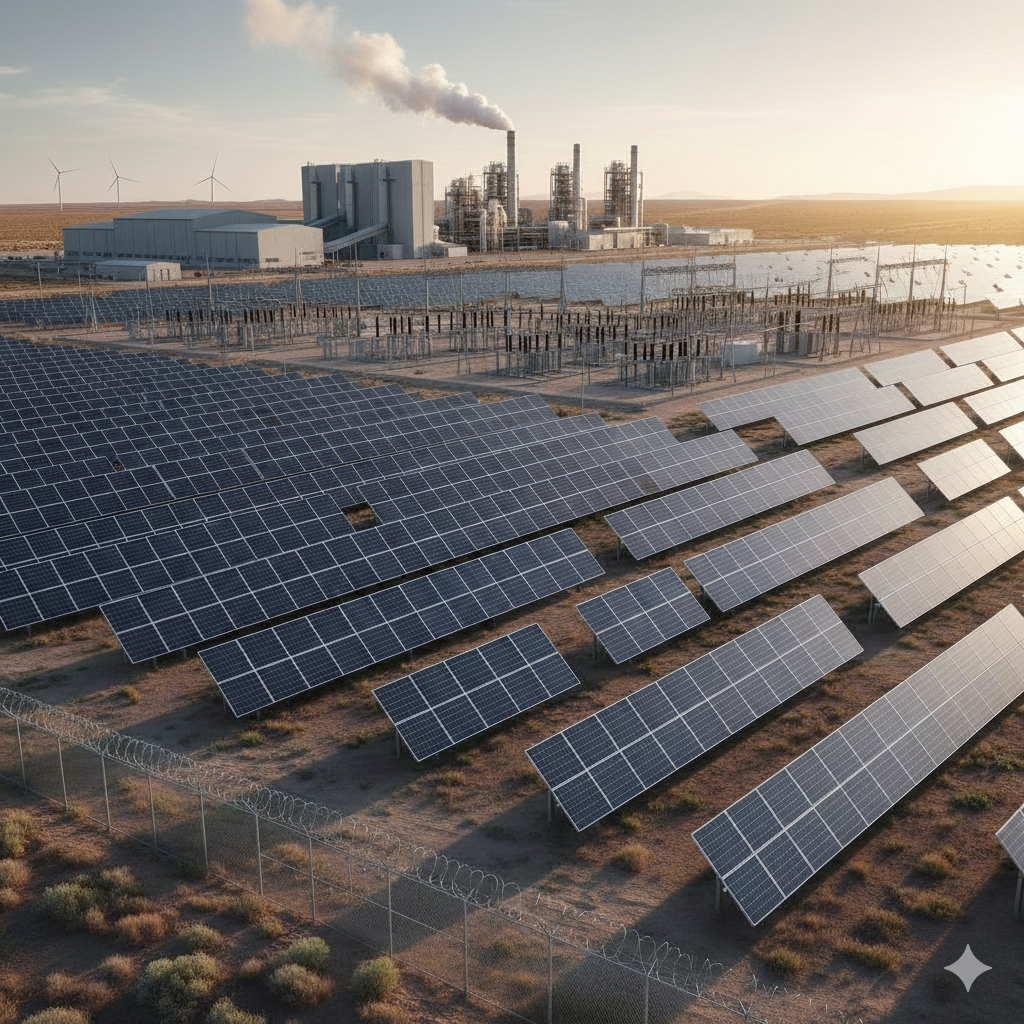
Utility-scale solar plants are designed to deliver continuous, high-capacity power directly to the transmission or distribution grid. These plants are engineered with advanced grid-compliance, forecasting, and control systems to ensure voltage stability, frequency regulation, and smooth power evacuation at large megawatt levels—without impacting grid reliability.
PEB Structures
Lightweight aluminum mounting for Pre-Engineered Building roofs.
MW Scale EPC
End-to-end execution for multi-megawatt ground-mount arrays.
Where Utility Scale Solar Excels
Central & State Government Projects
Support national renewable targets under MNRE, SECI, NTPC, and State DISCOM tenders by delivering large-capacity solar power plants with long-term PPAs and assured grid integration.
Solar Parks & Ultra-Mega Projects
Develop multi-MW to GW-scale solar parks under government-approved land and evacuation infrastructure, ensuring rapid deployment, lower tariffs, and bankable project structures.
DISCOM Power Procurement
Enable distribution companies to meet Renewable Purchase Obligations (RPO) through utility-scale solar plants that provide stable, cost-effective daytime power at the grid level.
Hybrid & RTC Renewable Projects
Integrate solar with wind and storage to deliver round-the-clock (RTC) power under government hybrid tenders, improving grid stability and reducing dependence on fossil fuels.
Utility-Scale Advantages
-
1
Grid Peak Support
Reduce stress on conventional power sources by supplying solar generation during daytime peak demand hours. Utility-scale plants help DISCOMs manage peak load requirements and reduce reliance on costly thermal peaking power.
-
2
Grid Code Compliance & Power Quality
Utility-scale inverters and plant controllers are designed to meet CEA and DISCOM grid codes, providing reactive power support, voltage regulation, and harmonic control to maintain overall grid stability.
-
3
Long-Term Tariff Stability
Lock in predictable solar tariffs under long-term PPAs (20–25 years), insulating utilities and government buyers from fuel price volatility and future power cost escalations.
Operational Reliability for Grid Networks
Utility-scale solar plants go beyond energy generation. They integrate plant-level SCADA, forecasting systems, and remote monitoring to ensure grid-compliant operation, high availability, and minimal human intervention—meeting the reliability expectations of national and state utilities.
4 Years to 8 Years
Average Payback Period
Major Government Solar Yojanas
India's strategic roadmap for solar expansion through utility-scale, agricultural, and grid-connected initiatives.
National Solar Mission (JNNSM)
The umbrella mission driving utility-scale, rooftop, and off-grid solar. It serves as the backbone of India’s massive solar capacity expansion.
Solar Park Scheme
Ultra Mega projects (500 MW+) with government-backed land aggregation and transmission, leading to lower tariffs and faster execution.
SECI Solar Tenders
Utility-scale plants, hybrids, and RTC (24x7) projects where developers sign bankable 25-year PPAs through competitive bidding.
DISCOM RPO Targets
Mandatory Renewable Purchase Obligations for state DISCOMs, ensuring a guaranteed market for utility-scale solar power.
PM-KUSUM Yojana
Agricultural solar focus enabling large plants on barren land. Farmers earn lease income while selling power to DISCOMs.
Green Energy Corridor
A specialized transmission infrastructure project designed to evacuate and integrate large-scale renewable energy into the national grid.
Hybrid & RTC Schemes
Promotion of Solar + Wind + Battery Storage solutions to ensure round-the-clock power supply and improved grid stability.
Viability Gap Funding (VGF)
Financial support from the government for strategic or high-capacity zones to keep solar tariffs competitive for the end-user.